Magazines

Primary Image

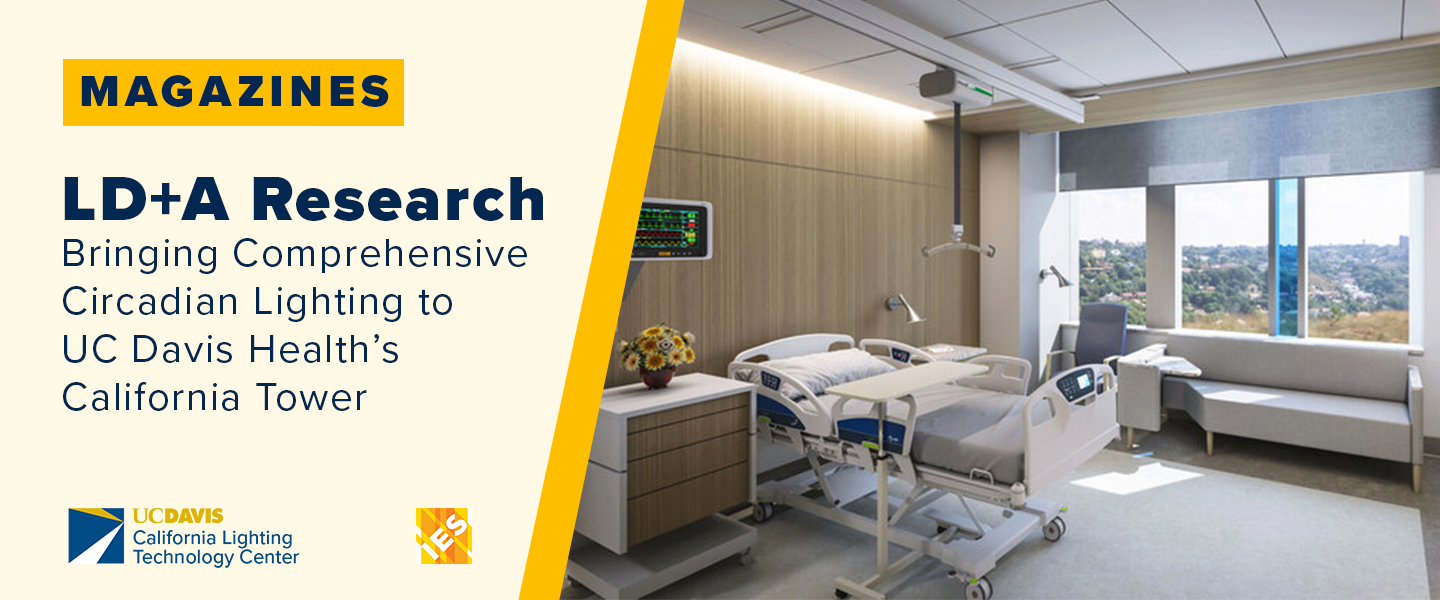
LD+A Research: Bringing Comprehensive Circadian Lighting to UC Davis Health’s California Tower

When the Design Team for UC Davis Health’s California Tower began planning the facility’s lighting system, it had a unique advantage just down the road: a university research center with 15 years of experience building and studying full-scale mock-ups of clinical spaces. Rather than joining as commercial consultants, Director Jae Yong Suk and Former Director Michael Siminovitch of CLTC served as faculty advisors, bringing public-service expertise to the design team.

Primary Image

LD+A Research: More than a View - The Biological Potential of Windows

UC Davis Professor Jae Yong Suk along with researchers from the New Jersey Institute of Technology and Oregon State University examine how window-view composition impacts human biology beyond simple aesthetics. Investigating 476 unique daylight and view conditions across the urban NJIT campus and the suburban UC Davis campus, the team measured vertical spectral irradiance and photopic illuminance alongside high-dynamic-range (HDR) fisheye imagery.

Primary Image

Ciluz Magazine: LEDs Took Over the World. What's Next?

In the March issue of the Chilean magazine Ciluz, CLTC Director Jae Yong Suk shares his expertise on the future of lighting and how the center is steering the industry forward. The issue highlights technical advancements in sustainable lighting and addresses the growing impact of light pollution.

Primary Image

LD+A Research Matters: Managed Loads, Maximum Flexibility

Residential Electrification is growing faster than the electrical infrastructure found in much of our existing housing stock. Heat-pump HVAC systems, heat-pump water heaters, induction cooking, and electric-vehicle (EV) charging are becoming common expectations in both new construction and retrofit projects. Many single-family homes built before the 1990s, however, were never designed to support these combined loads. The result is familiar to contractors and homeowners alike: a service upgrade.

Primary Image

LD+A Research: How Can Lighting Enhance Your Perceptual Music Listening Experience?

While music’s ability to evoke emotions is well established, far less is known about how environmental factors, especially lighting, shape music perception. To explore this, researchers at Arizona State University and the California Lighting Technology Center conducted experiments in a controlled room equipped with adjustable LED lighting. Twenty-two participants experienced four lighting conditions (blue, red, cool white, and warm white) while listening to short clips of happy and sad music.

Primary Image

LD+A Research: Lighting Quality Over Quantity: How Full-Spectrum LEDs Influence Lighting Preferences and Visual Performance

Lighting is essential to visual performance but also human health, mood, and overall well-being. A growing body of evidence underscores the importance of both the quantity and quality of light in shaping these outcomes. Traditional energy programs, such as those in California’s Building Energy Efficiency Standards or federal ENERGY STAR specifications, have historically emphasized luminous efficacy.

Primary Image

LD+A Research Matters: Empowering Electricians — Securing the Future of Smart Buildings with Cybersecurity Skills

As buildings become increasingly integrated with advanced control technologies, cybersecurity concerns have risen significantly. This is particularly true for networked lighting systems, as cybersecurity has become more important due to their growing integration with IP networks and other building IT and operational technology (OT) systems. Historically, electricians have focused on physical and electrical installations, occasionally handling system commissioning. However, the advent of networked control systems in modern buildings requires electricians to acquire a new skill set.

Primary Image

LD+A Research Matters: Bright Ideas for Safer Nights — Transforming Outdoor Lighting in Underserved Communities

Exterior lighting, predominantly powered by carbon-intensive fossil fuels during high residential usage hours, poses environmental and safety challenges when power outages leave communities in darkness for extended periods. In response, the California Energy Commission funded a sustainable exterior lighting initiative at the California Lighting Technology Center (CLTC) at the University of California, Davis to develop and demonstrate Renewable Energy and Advanced Lighting (REAL) systems.

Primary Image

LD+A Research Matters: Optimizing Your Workout Environment — How Lighting Impacts Exercise

When it comes to physical training, the environment individuals choose can significantly enhance their performance. A recent study by Professor Dongwoo Jason Yeom and Ph.D. student Seonghyuk Son of Arizona State University and Professor Jae Yong Suk of the California Lighting Technology Center at the University of California, Davis explores indoor lighting and its influence on physiological signals in humans during exercise.

Primary Image

LD+A Research Matters: Maximizing Energy Savings with Optimized Dimming Ramp Rates in Retail and Museum Buildings

According to a study conducted by the U.S. Department of Energy, lighting accounts for 18% of the energy used by commercial buildings in the U.S., making lighting upgrades with controls a significant opportunity for energy savings. When properly designed, today’s LED technology pairs well with advanced controls. One example of a lighting control strategy typically used in circulation spaces for commercial buildings like offices and schools is occupancy sensing, which automatically turns lights off when spaces are unoccupied and turns lights on when spaces are occupied.