Primary Image

LD+A Research Matters: Performance Evaluation of a Solar Tracking Lighting System

CLTC recently partnered with the California Energy Commission, Sonoma Clean Power Authority, and Frontier Energy Inc. to evaluate opportunities in emerging daylighting technologies. One such technology is a solar-tracking lighting system, which delivers daylight via optical fibers to core building areas that otherwise do not have access to daylight.

Primary Image

LD+A Research Matters: Integral Metering & Reporting Capabilities of Networked Lighting Controls

Networked lighting control (NLC) systems have proven they can successfully reduce demand and save energy in real-world applications through a combination of basic and advanced control strategies. However, the potential of NLCs’ integral metering and reporting capabilities to provide cost effective energy-use data for incentive programs and outcome-based code opportunities has not been fully realized. This is, in part, due to the variety of metering and reporting approaches used by today’s NLCs.

Primary Image

Adaptive Lighting in Outdoor Security Applications

Today, adaptive lighting, which is lighting controlled by occupancy sensors or schedules that adjust light levels based on actual site conditions, is considered best practice for numerous outdoor applications. Adaptive lighting has been adopted as part of some commercial energy standards and the strategy is now included in many outdoor lighting specifications and design guides. Outdoor areas with heightened security requirements, however, are often excluded from adaptive lighting control requirements and these areas remain lit with high, uniform levels of static illumination.

Primary Image

LD+A Research Matters: Outcome-Based Codes Offer a New Path

Outcome-based energy codes are relatively new. They incorporate strategies that quantify a building’s actual energy performance over time to demonstrate code compliance. The term "outcome-based" refers to the fact that compliance is linked with a building’s actual energy “outcome” which may be measured post-occupancy.

Primary Image

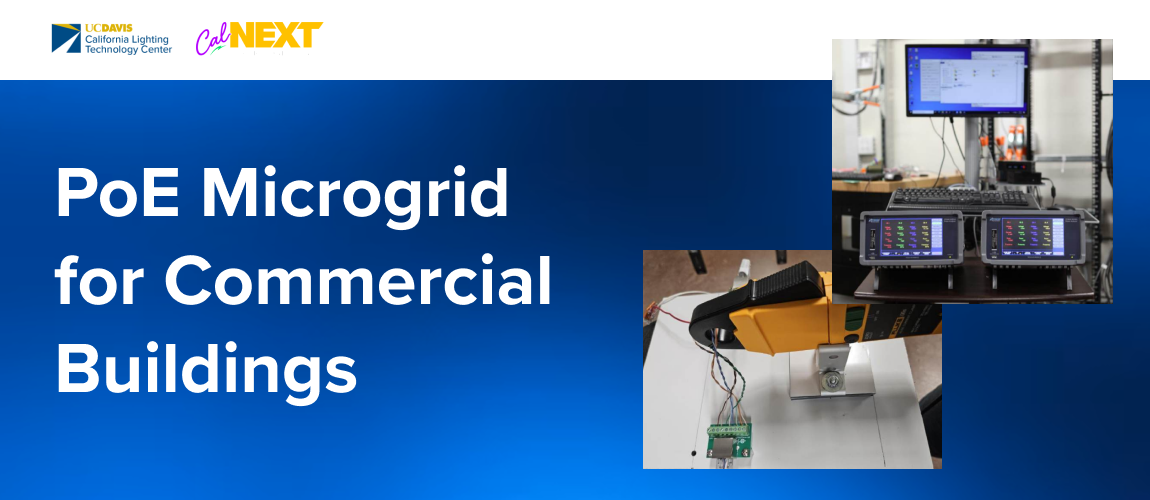
Laboratory Evaluation of DC Lighting Systems

Historically, power distribution has been dominated by Alternating-Current (AC) which significantly influenced the design of connected energy-consuming appliances.  With the emergence of electronics and digital controls as standard design elements in almost all appliance categories, the need for Direct-Current (DC) has emerged, even as it opposes traditional distribution practices.  This issue is typically resolved at the appliance level with AC-to-DC converters. 

Primary Image

2019 Title 24, Part 11 CALGreen Moves to 3,000 K for Select Outdoor Applications

CLTC participated in the 2019 Title 24, Part 11 CALGreen code-development process to incorporate lower CCT standards for certain outdoor lighting applications. CLTC provided key testimony and support during public meetings in support of this specification.  Considerable scientific data currently exists indicating that light at night can be a significant issue in terms of circadian disruption leading to poor health and wellness outcomes.

LD+A Research Matters: Light Boxes

From airports to bus shelters, casinos to theaters, and streets to roadways, backlit display lightboxes highlight advertising and wayfinding messages in public spaces. For example, there are approximately 4,250 malls in the U.S. According to the 2009 Directory of Major Malls, each mall includes a range of two to 50 lightboxes used for advertising and directional signage. Approximately 85,000 large lightboxes are bringing light to retail messages in malls across America on a daily basis.

LD+A Research Matters: Adaptive Outdoor Lighting

Have you ever walked down a street when, suddenly, the light above you turns off?  Have you driven past an empty parking lot or garage late at night and questioned why we brightly light many of these unoccupied spaces?  Recently, the California Energy Commission funded the California Lighting Technology Center (CLTC) at the University of California, Davis, to explore the many opportunities for  improving existing exterior lighting practices through the implementation of emerging technologies. 

LD+A Research Matters: DALI Control Devices

In response to the addition of the Digital Addressable Lighting Interface (DALI) ballast protocol to the international fluorescent ballast standard, representatives from the National Electrical  Manufacturers Association (NEMA) Lighting Controls, Ballast, Luminaire and Wiring Device Sections began development of an additional DALI protocol to incorporate lighting control devices such as  wall switches, scene  switches, occupancy sensors and photo sensors.