CLTC collaborated with the Emerging Technologies group at the Pacific Gas & Electric Company to evaluate linear LED lamps in a variety of fixture applications as well as identify any interoperability issues.
The California Energy Commission adopted new standards updating the Appliance Efficiency Regulations (Title 20) for lighting appliances. Updates rolled out in two tiers with Tier 1 effective January 1, 2018 and Tier 2 effective July 1, 2019. Notably, this update adds standards for small-diameter directional lamps. The updated regulations incorporate elements of lighting product quality for both general service LED lamps and small-diameter directional lamps in addition to the traditional lighting appliance efficiency standards previously included in the regulations.
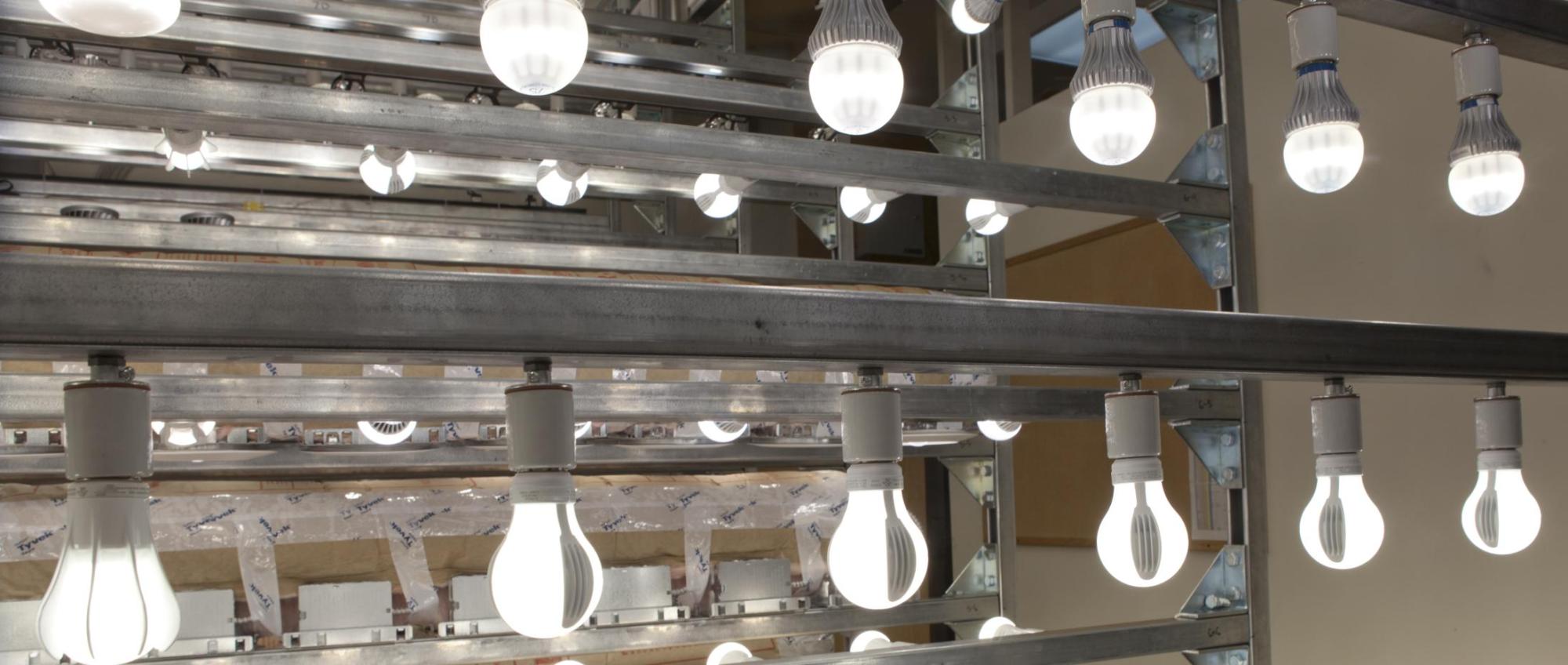
Widespread adoption of LED lighting for general illumination applications is poised to be the single, largest advancement in lighting efficiency during the 21st century. Due to its potential, a variety of market actors have introduced LED products and made associated performance claims that have set the technology up with somewhat unrealistic expectations regarding system efficacy and longevity. To compete in this market, LED manufacturers have focused on research to improve efficacy and reduce product costs, often at the expense of product quality and feature optimization.
CLTC, in collaboration with the Office of Naval Research, developed new, improved strategies and technologies for occupancy sensing in outdoor applications that address the shortcomings of existing strategies and technologies. The project approach included the systematic identification of the pros and cons of existing strategies and technologies, formulation of new strategies and/or technologies, and implementation of new approaches in the form of laboratory prototypes that will be tested and demonstrated in the laboratory and in the field.
CLTC, in partnership with Southern California Edison, completed a project portfolio from 2014-2018 to assess controls, lighting, and daylighting technologies and their potential for commercial applications. The projects have elements of market assessment, EM&V, and selected demonstrations.
The project focus is on evaluating the following technologies:
Advanced lighting control systems (ALCS) provide networked control and monitoring capabilities of connected luminaires via onboard metering and system reporting features. These advanced features allow system owners to dynamically balance visual comfort and lighting energy use. CLTC, in collaboration with SDG&E, developed a technology validation program to determine the accuracy and reliability of onboard metering and system reporting features of advanced lighting control systems.
CLTC partnered with Bosch to demonstrate the Bosch Direct Current Building-Scale Microgrid Platform (DCBMP) at an American Honda Motor Co., Inc. warehouse facility. Bosch demonstrated the effectiveness of the DCBMP, a commercial-scale DC building microgrid that integrates advanced technologies to provide reliable power to the connected loads, resilience during grid outages, increased building energy efficiency and renewable energy utilization.
Lighting projects that involve updating CFL lighting systems should consider all viable retrofit options. When retrofitting between CFL four-pin lamps and LED solutions, it is important to observe safety precautions and consider performance variables.
The California Lighting Technology Center partnered with San Diego Gas & Electric and two Southern California cities on a project to help accelerate the adoption of energy-efficient advanced outdoor lighting control systems.
The project evaluated outdoor wireless lighting control systems that allows for remote operation and monitoring of fixtures using a web-enabled central management system. Laboratory and field assessments were conducted for separate systems installed as part of citywide retrofit projects in San Diego and Chula Vista.
Linear fluorescent lamps account for 83 percent of installed lamps in the California commercial sector per a lighting market characterization performed in 2014. LED lighting products are receiving attention for their potential to replace fluorescent lighting, reduce energy use and improve lighting quality in a variety of indoor commercial applications, including offices, classrooms and retail stores.